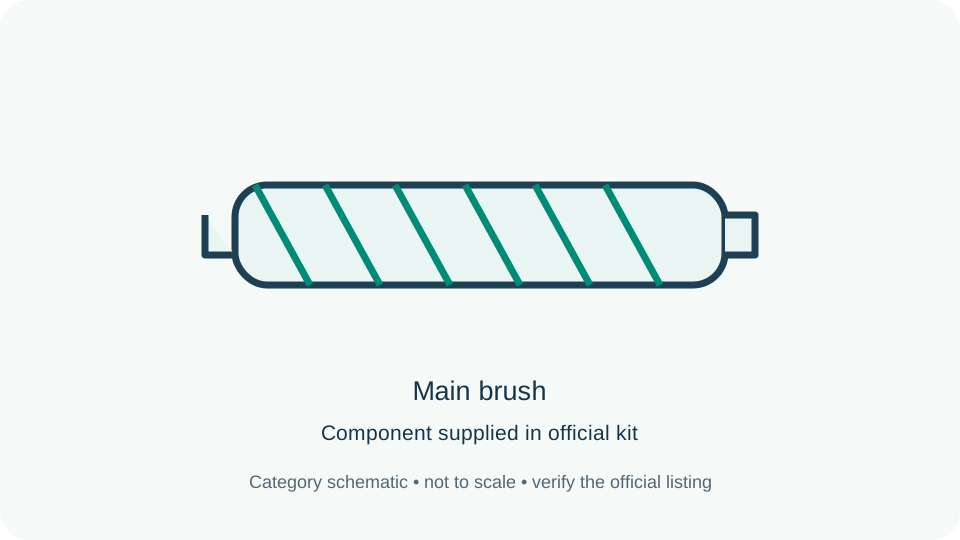
Dreame D30 Ultra main brush: clean or inspect Once every 2 weeks. Replacement guidance: Every 6–12 months. Manufacturer maintenance source.
Compare every recorded main brush relationship for this exact robot in one place. 1 Fits. The decision applies to the named original item and the written caveat; it does not approve a generic lookalike.
Match the complete roller assembly, including both end caps, bearing seats and the drive connection. A similar roller length or rubber color does not prove that it will seat in the cleaning head. Single rollers, bristle-and-beater pairs and dual rubber rollers use different decks. Check the manufacturer's supported-model list before transferring a roller between generations.
Remove hair and thread from the user-serviceable brush ends before deciding that the roller needs replacing. Follow the exact robot manual for opening the brush cover and refitting its latches. A brush obstruction error is a symptom: it can come from trapped debris, an incorrectly seated cover or a damaged assembly. It is not automatic proof that a new brush will fix the robot.
For an aftermarket listing, inspect the supplied components rather than only its photograph. Some packs include a roller without the end caps or bearing pieces shown in the original assembly. Ask for the written model list and return policy. This page records manufacturer fit evidence; it does not report comparative cleaning, noise, durability or carpet tests.
Similar models and exclusions
Accessory kits are series-specific. L10s Ultra and L10s Ultra Gen2 are not the same catalog line. Check the component list inside an official maintenance kit; a kit photo alone does not prove that every included item fits another generation.
Questions about Dreame D30 Ultra
Does a listed original part verify an aftermarket pack?
No. Match that pack separately. The original identifier, source market and any model suffix must agree, and seller-only wording remains unverified.
Why can the page show an excluded or unverified item?
Those records explain a known mismatch or an evidence gap. They help prevent an incorrect purchase; neither state has a shopping button.